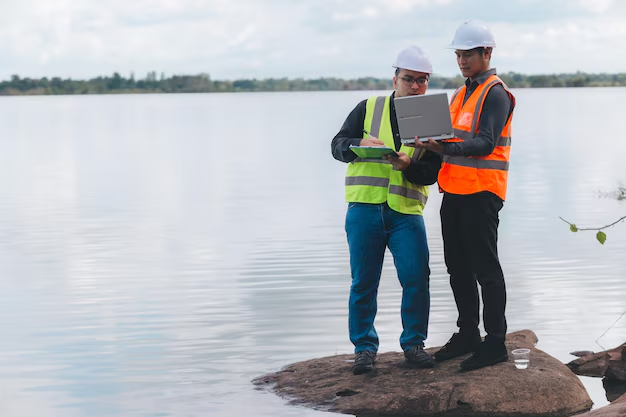
Before any major property transaction or development project, an Environmental Site Assessment (ESA) is a crucial step to identify potential environmental contamination and liability. It is essential for property buyers, sellers, developers, and lenders to understand the difference between a Phase I and Phase II ESA to make informed decisions and manage risk effectively.
The Purpose of Environmental Site Assessments
An Environmental Site Assessment is a risk management tool used to evaluate a property for potential environmental contamination. The primary goal is to identify Recognized Environmental Conditions (RECs), which are the presence or likely presence of hazardous substances or petroleum products in, on, or at a property.
This process is critical for several reasons. For buyers, it helps avoid acquiring a contaminated property and inheriting costly cleanup liabilities. For sellers, it can streamline the sale process by providing transparency about the property’s environmental condition. Lenders also frequently require ESAs to protect their investment from being devalued by environmental issues. Ultimately, these assessments are a key component of environmental due diligence.
What is a Phase I ESA?
A Phase I ESA is a non-intrusive investigation designed to identify potential or existing environmental contamination liabilities. It’s essentially a background check on the property’s history and current state without collecting any physical samples. The process is standardized by the American Society for Testing and Materials (ASTM) under the standard E1527-21.
The Process and What to Expect
A qualified environmental professional conducts a Phase I ESA by focusing on four main components:
- Records Review: The assessor examines historical records to understand past uses of the property and the surrounding area. This includes reviewing historical aerial photographs, city directories, fire insurance maps, and government environmental databases. The goal is to find evidence of activities that could have resulted in contamination, such as the presence of underground storage tanks, industrial operations, or chemical spills.
- Site Reconnaissance: This involves a thorough physical inspection of the property. The environmental professional walks the site to look for visual evidence of contamination. This includes searching for stained soil or pavement, stressed vegetation, strange odors, storage drums, and evidence of current or former underground or above-ground storage tanks. The inspection also covers adjacent properties to identify any off-site threats.
- Interviews: The assessor interviews people familiar with the property. This can include current and past owners, occupants, and even local government officials. These interviews provide valuable context about the property’s history and potential environmental concerns that might not be apparent from records or a visual inspection.
- Report: After gathering all the information, the environmental professional prepares a comprehensive report. This document details the findings of the investigation and provides a professional opinion on whether any RECs exist. If RECs are identified, the report will often recommend that a Phase II ESA be conducted to investigate further.
A Phase I ESA typically takes two to four weeks to complete, depending on the availability of records and the complexity of the site.
What is a Phase II ESA?
If a Phase I ESA identifies RECs or potential contamination, a Phase II ESA is the next logical step. Unlike the non-invasive Phase I, a Phase II ESA involves collecting and analyzing physical samples to confirm the presence, type, and extent of hazardous substances. It is an intrusive investigation tailored to the specific concerns identified in the Phase I report.
Sampling and Analysis
The scope of a Phase II ESA is highly specific to the site. The environmental consultant develops a sampling plan based on the findings of the Phase I assessment. Common activities include:
- Soil Sampling: Soil borings are drilled in areas of concern, and samples are collected at various depths to test for contaminants.
- Groundwater Monitoring: Monitoring wells may be installed to collect groundwater samples, which are then analyzed for pollutants that may have leached from the soil.
- Surface Water and Sediment Sampling: If the property is near a body of water, samples might be taken to assess for runoff contamination.
- Vapor Intrusion Assessment: This involves collecting soil gas or indoor air samples to determine if volatile chemicals from contaminated soil or groundwater are migrating into buildings.
The collected samples are sent to an accredited laboratory for chemical analysis. The results are then compared to federal, state, and local water quality compliance standards to determine if contamination levels exceed acceptable limits.
The Phase II report will summarize the findings, confirming whether contamination is present and providing data on its concentration and location. If contamination is confirmed, the report may also outline potential remedial options and associated costs.
Benefits of Conducting Environmental Site Assessments
Performing thorough ESAs offers significant advantages that go beyond simple regulatory compliance.
- Informed Decision-Making: ESAs provide critical information that allows buyers, sellers, and lenders to make confident decisions about property transactions.
- Liability Protection: Under the Comprehensive Environmental Response, Compensation, and Liability Act (CERCLA), landowners can be held responsible for cleanup costs even if they didn’t cause the contamination. A properly conducted Phase I ESA is a key component of the “All Appropriate Inquiries” (AAI) rule, which can provide liability protection for innocent landowners.
- Financial Security: For lenders, an ESA protects their collateral. For buyers, it prevents the unforeseen and often substantial costs associated with environmental cleanup.
- Project Planning: Identifying contamination early in the development process allows for better project planning and budgeting, avoiding costly delays and surprises down the road.
Choosing the Right Environmental Consultant
The quality of an ESA depends entirely on the expertise of the environmental professional conducting it. When selecting a consultant, consider the following:
- Qualifications and Experience: Ensure the consultant meets the ASTM E1527-21 definition of an Environmental Professional, which requires specific education, certification, and relevant experience. Look for a firm with a proven track record in conducting ESAs for similar property types.
- Insurance: Verify that the consultant carries adequate professional liability (Errors and Omissions) and pollution liability insurance. This protects you in case of mistakes or oversights.
- Local Knowledge: A consultant familiar with local geology, hydrology, and state-specific regulations can provide a more accurate and relevant assessment.
- Clear Communication: Choose a consultant who can clearly explain the process, findings, and recommendations in a way that you can understand.
Conclusion
Now that you have a better understanding of why it is important to choose the right environmental consultant, take the time to research and find the best fit for your specific project. Remember to consider qualifications, experience, insurance coverage, and local knowledge when making your decision.